
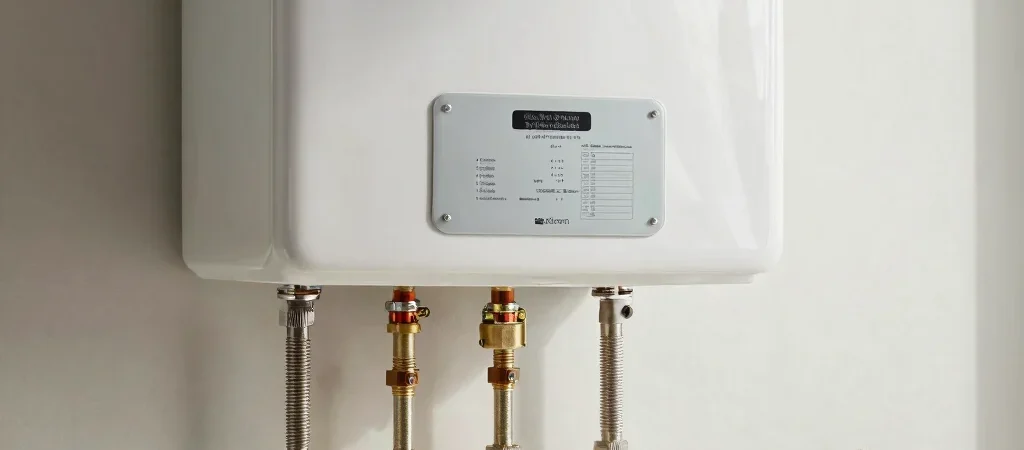
When two water heaters have similar capacity claims, a feature list rarely tells the whole story. A useful review connects the model’s specifications to the home’s fuel, demand, and installation conditions. That makes it easier to compare a specific model with alternatives without treating any one feature as a universal advantage.
Begin with the core specifications
For a storage model, check tank capacity, first-hour rating, energy source, and efficiency information. For a tankless model, compare flow at a stated temperature rise, fuel type, and the conditions behind any capacity claim. Specifications are most useful when they are presented on a like-for-like basis; a maximum flow figure without its temperature-rise context can be difficult to interpret.
Check what installation demands
Look for details about venting, electrical requirements, fuel connections, physical dimensions, and required clearances. These can determine whether a model is a straightforward replacement or a project that calls for additional work. Product documentation and local installation requirements matter here, so an online review should not substitute for confirming conditions in the home.
Separate evidence from preference
A comparison should distinguish published specifications from editorial judgment and avoid claiming hands-on testing unless that testing is actually documented. Consider whether a feature addresses your household’s demand, whether the unit fits the existing setup, and what information remains uncertain. Some links in our reviews may be affiliate links that earn a commission at no extra cost to you; that relationship does not determine which criteria we use. Before narrowing to a model, write down the few requirements it must meet and verify them against the manufacturer’s documentation and an installer’s assessment.