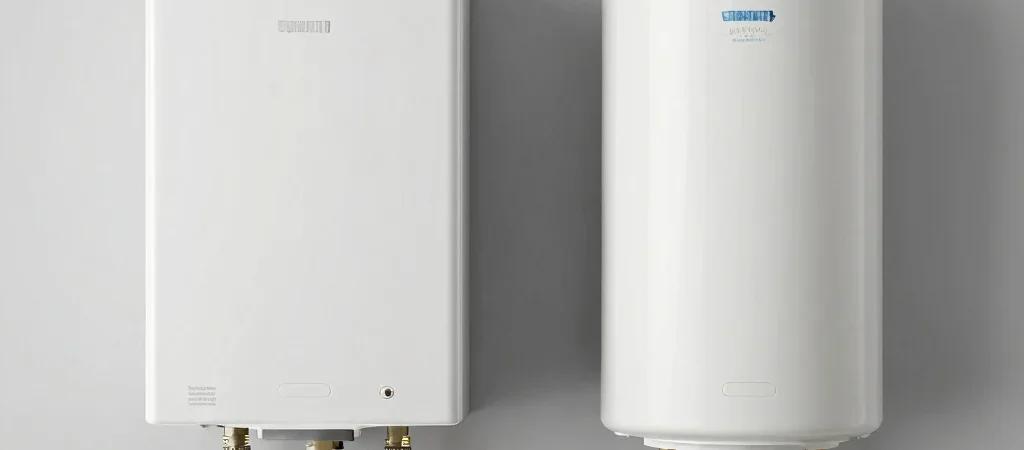
A household that showers back-to-back has a different hot-water pattern from one that regularly runs a shower, dishwasher, and laundry at the same time. That distinction matters more than choosing a water heater because one format sounds newer. Compare the timing and overlap of hot-water use before weighing tank against tankless.
How storage changes the equation
A storage water heater keeps a reserve of hot water ready, so it can serve a concentrated period of demand until that supply is used. Its first-hour rating is a useful comparison point: it estimates how much hot water the unit can deliver in an hour starting with a full tank. A larger tank is not automatically the answer if the household’s peak demand is modest.
What tankless units require
A tankless water heater heats water as it passes through the unit, so comparisons should focus on flow rate at the temperature rise your home requires. Cold incoming water and simultaneous fixtures can reduce the flow available at a comfortable temperature. Check the product’s capacity details against the draws your household actually overlaps, not just the number of bathrooms.
Include the installation constraints
Fuel supply, venting, electrical service, clearances, and the existing plumbing can all affect whether a particular model is a practical fit. A tankless conversion may involve more than replacing the heater, while a tank model still needs suitable space and connections. Some links on this site may be affiliate links, which can earn us a commission at no extra cost to you; that does not change the comparison criteria. Before choosing a format, confirm the home’s demand and have the installation requirements checked.